
Wafer Sticks: How Filling and Forming Shape the Finished Crunch
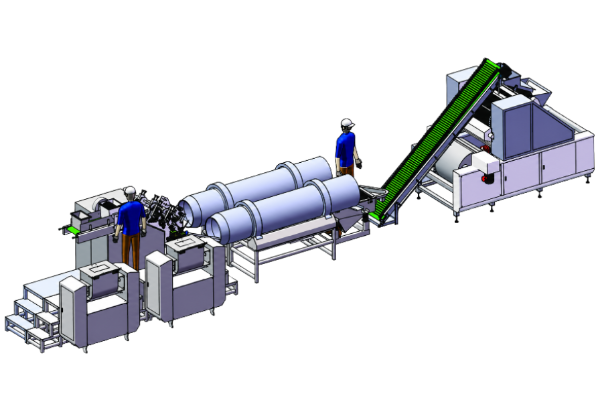
Wafer sticks can be light and hollow, generously filled, or coated for a different bite. For a bakery developing a packaged product, those choices affect much more than flavour. The filling has to dose consistently, the baked sheet has to form without damage, and the finished stick has to keep its intended texture after packing. A sample that tastes good beside the machine is only the beginning of that assessment.
Begin with the product you want to sell. Define the shell, the centre and the way customers will eat it before choosing the production route. A dessert garnish, an individually wrapped snack and a filled stick for a gift assortment may look related, yet their handling and storage demands can be quite different.
What separates wafer sticks from other crisp biscuits?
A rolled wafer stick is formed from a baked sheet rather than cut from a thick dough piece. The sheet must reach the forming station in a condition that permits winding. Its structure then becomes part of the final bite. Flat layered wafers follow another route: sheets are assembled with cream layers and cut into portions instead of being wound into tubes.
Names on retail packs are not precise equipment specifications. Photographs of the cross-section, examples of the intended shell and an explanation of the filling route help a supplier understand the product far better than a request for a generic biscuit machine. Keep savoury wrapped rolls outside this comparison; they use a different preparation and forming process.
Where it stops: a machine capable of winding a tube is not automatically suitable for every diameter, wall structure, filling or decorative finish. Confirm the actual product envelope with a trial.
Choose the filling route before choosing the pump
UDTECH describes a wafer-stick line that bakes the sheet, injects a core while the sheet remains formable, then winds and cuts the roll. Its page lists a roll-length range of 70–140 mm. That published configuration is a useful reference for discussing an integrated route, but it does not establish that an unfamiliar filling will pump or form acceptably without testing.
Other product designs may introduce filling after a shell has been formed. Treat these as different process proposals. Ask when the centre enters, what supports the shell at that moment and how the filling reaches the intended length without leaking or leaving an unwanted hollow section. A photograph of a filled stick does not reveal the production sequence that made it.
Bring the actual filling to the equipment discussion. Ingredient particles, temperature sensitivity and consistency during a production hold can matter to dosing. Describing it merely as chocolate or cream leaves too much room for misunderstanding.
Why filling consistency changes during a run
A filling that looks uniform in a bowl may behave differently after holding, recirculation or repeated pumping. Record the conditions at the hopper and near the dosing point, not just the temperature at the end of mixing. Where the process allows it, compare observations near the start and later in the run while keeping the recipe unchanged.
Look for a pattern rather than immediately changing the recipe. Uneven core weight could arise from delivery variation, an interruption in supply or a change in the material reaching the pump. Examine what changed at the same time. Adjusting pressure, speed and filling composition together makes the next result difficult to interpret.
Where it stops: a stable average weight does not prove a stable distribution of filling. Inspect cut sections and individual finished pieces alongside the batch average, using a sampling plan appropriate to the product and the production risk.
Shell formation deserves its own inspection
Examine the shell before blaming the centre. Irregular sheet thickness, poor winding and cracks at discharge can all change the eating experience. A broken shell also changes how filling is presented inside the pack. Follow sample pieces from forming through cooling and transfer so the point at which damage appears remains visible.
UDTECH’s equipment description places baking, core injection and forming on a continuous route. For a buyer, the practical implication is that the trial should show those stages operating together. A demonstration of the oven followed by a separate demonstration of the pump leaves the interaction between them untested.
Retain both acceptable and rejected pieces. They give operators a shared visual reference and make the acceptance discussion more concrete. A general instruction to produce a crisp, attractive stick is too vague to explain whether a seam, chip or uneven core is acceptable.
A simple comparison plan for hollow and filled sticks
When the equipment can run both formats, a hollow sample provides a useful reference for the shell. Compare it with the filled version under clearly recorded conditions. This is a screening exercise, not a substitute for product development or a validated shelf-life study. Its value is in separating questions that would otherwise be bundled together.
| Sample | Question it helps answer | Important limit |
| Fresh hollow shell | Is the shell initially formed as intended? | Does not represent a filled product |
| Fresh filled stick | Do shell formation and dosing work together? | Does not establish storage performance |
| Packed retained sample | What changes in the intended package? | Only represents the recorded conditions |
Mark each sample so that recipe, filling condition, production time and package can be recovered later. A comparison loses much of its value when the attractive sample is easy to find but nobody can identify the conditions under which it was produced.
Crispness is a product-and-package question
Keep the filling and package in the conversation about texture. A supplier’s statement that a machine makes crisp shells describes a different question from whether your filled sticks will remain satisfactory through distribution. Moisture relationships within the product and exposure during handling need consideration alongside the package’s protection.
Do not choose a storage claim from somebody else’s wafer product. Formulation, shell structure, packaging and storage conditions may all differ. Even when an existing study is relevant to the mechanism, its acceptance limit belongs to the tested product. Commission a suitable assessment for the product you intend to sell rather than borrowing a convenient duration.
Check physical protection too. A film with suitable barrier properties does little to prevent damage caused by a badly aligned transfer or excessive pressure in the carton. Distinguish a softened shell from a crushed one before changing the material specification.
Match the equipment discussion to a finished sample
The current UDTECH website asks buyers to provide product photographs, finished dimensions, piece weight and target output when discussing a line. Its food machinery range from UDTECH provides a starting point for matching a wafer-stick concept to the appropriate production family. Use that discussion to request a trial with your own filling and shell specification, rather than assuming that a standard demonstration product represents your recipe.
Ask which auxiliary stages are included. Mixing, filling preparation, cooling and wrapping may sit outside the basic forming machine even though they determine whether the complete process works. Each interface needs an owner, a capacity basis and a clear description of the product it receives and delivers.
If a filling interruption occurs during the demonstration, follow the affected product from the dosing point to the discharge and ask the operator to identify where incomplete sticks will be separated, how the line will restart, and what observation confirms that the recovered product can rejoin normal packing without mixing unfilled pieces into the accepted batch. Make the boundary visible.
Before comparing retained samples, check that their shell recipe, filling composition, package material and storage conditions are actually comparable, because changing the filling supplier at the same time as the film or cooling arrangement can produce an apparent improvement that the business cannot confidently attribute to the machine, the recipe or the package when it repeats the trial. Trace the change.
What to record before approving the product
- The shell format and the filling route, supported by a cross-section sample.
- The filling condition at dosing and any changes during the run.
- Individual piece observations as well as average finished weight.
- The location of cracks, leaks or inconsistent cores.
- The packaging route and clearly identified retained samples.
- The limits of the trial, including any product or storage condition not assessed.
Good wafer sticks emerge from a coordinated process, not from an isolated promise about a pump or an oven. Start with the intended bite, test the shell and filling together, and carry the sample through the same packing route planned for sale. That gives the business a defensible basis for choosing equipment and refining the product.
